How can we know bad a good thing without someone who is guiding us? Would someone who has a slave think slavery is bad? It’s normal for them because they saw it every day.
How can we know bad a good thing without someone who is guiding us?
modern theology is almost always based on universal principles, i.e. insights that apply everywhere, at any time. in western literature since aristoteles, these have mainly been identified to fall into three categories:
mathematics
physics
biology / chemistry
(or in the medieval ages, they were called “theology” / “law studies” / “medicine”, but these topics have been abstracted a whole lot since then.)
to your specific question: slavery is bad because it contradicts the self-determination of the person who is able to think for themselves. modern views (e.g. calvinism claim that every human is physiologically able to make their own decisions wisely enough; therefore they should also get the practical possibility to decide things for themselves).
this is not “somebody” guiding us; it is some ideas guiding us. there’s a crucial difference there.
Who decides universal principles? It’s like putting humans in a town which doesn’t have any human and they know there, they won’t know anything. Even a language, ethics etc.


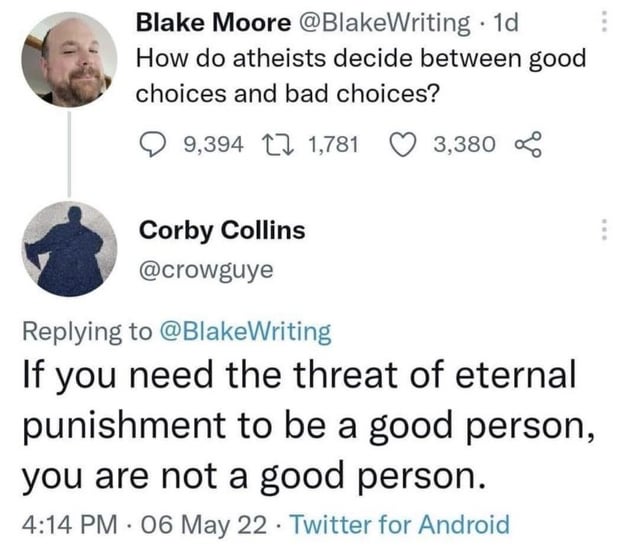
How can we know bad a good thing without someone who is guiding us? Would someone who has a slave think slavery is bad? It’s normal for them because they saw it every day.
i’m not sure whether this is a serious question.
modern theology is almost always based on universal principles, i.e. insights that apply everywhere, at any time. in western literature since aristoteles, these have mainly been identified to fall into three categories:
(or in the medieval ages, they were called “theology” / “law studies” / “medicine”, but these topics have been abstracted a whole lot since then.)
to your specific question: slavery is bad because it contradicts the self-determination of the person who is able to think for themselves. modern views (e.g. calvinism claim that every human is physiologically able to make their own decisions wisely enough; therefore they should also get the practical possibility to decide things for themselves).
this is not “somebody” guiding us; it is some ideas guiding us. there’s a crucial difference there.
Who decides universal principles? It’s like putting humans in a town which doesn’t have any human and they know there, they won’t know anything. Even a language, ethics etc.
And, thanks for the answer.