

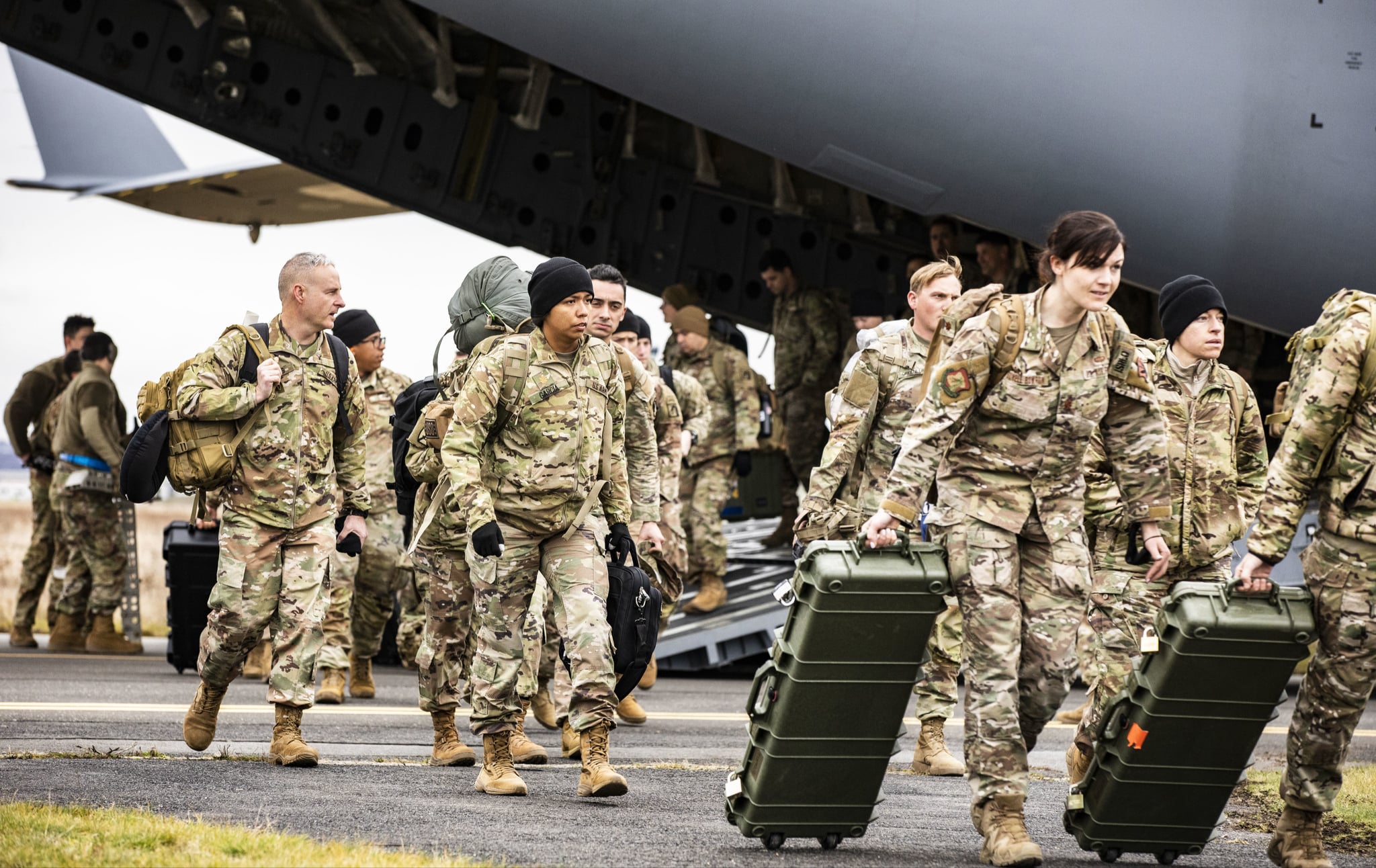
Many will argue that service members cannot simply pick and choose which conflicts they participate in; that the nature of military service by definition requires unique sacrifices of personal freedoms. If service members can simply walk away from the job when they feel like it, the argument goes, there is little point to having a military.
There is some truth to this, but few consider the other side of the coin: those sacrifices cannot be taken lightly by the state either. When service members die or are wounded for a cause that doesn’t make sense, as is often the case, decision makers must face consequences—or they will repeat their mistakes.
This dynamic plays out legally too. President Truman was the first to enter a conflict without getting a formal declaration of war from Congress, as the Constitution requires, and that has set the precedent for every president since. But until now presidents at least sought congressional approval for major conflicts; this disastrous war began without even a consultation from lawmakers. It marks the nail in the coffin for the separation of powers and for the 1973 War Powers Resolution, which requires unauthorized troop commitments to be limited to 60 days. Absent resistance now, the law will be meaningless, and presidents will have no checks on their ability to start major wars.
Americans are being sent into harm’s way today for a stupid, immoral project because the Pentagon recently got away with it twice in a row, in Iraq and Afghanistan, with little consequence.
I did, still true in 2020.
I am not defending the US military, I am pointing out it is more nuanced and mixed up than your narrative implies.
It is literally less nuanced than what I said. I said over-represented, and worded it that way specifically to comfort people who take offense at the notion that privileged people are actually bad. In truth, the overwhelming majority are middle-class and white, and they are represented at rates that are not only disproportionate to the civilian workforce, but contradictory to rates of poverty and coercive labour along racialized and class lines.
Did you not even read the entire document before trying to act like 50k- 70K annually is too little to keep from joining the genocide brigade? Or is this just a self-report that you come from a place where 70k isn’t a lot to make in a year?
You think trying to maintain a family/household at 70k is actually being in the middle class in the US? Sure if you live somewhere with no social safety net…
My guy, I know what poverty looks like, and people who make half of that don’t resort to murder to get what they need. Even if that was the case (it’s not like the standard of living is very high in the US relative to the wealth it hoards), then it is still inconsistent with rates of poverty throughout the US, which means it is not that which makes people join. I grew up in the rust belt, I know what it is to be poor and I know what quality of people join the military. Don’t try to act like you have any empathy for impoverished people if you’re going to adopt this blatantly sympathetic narrative for an institution that commits violence against vulnerable people at an incomprehensible scale.