

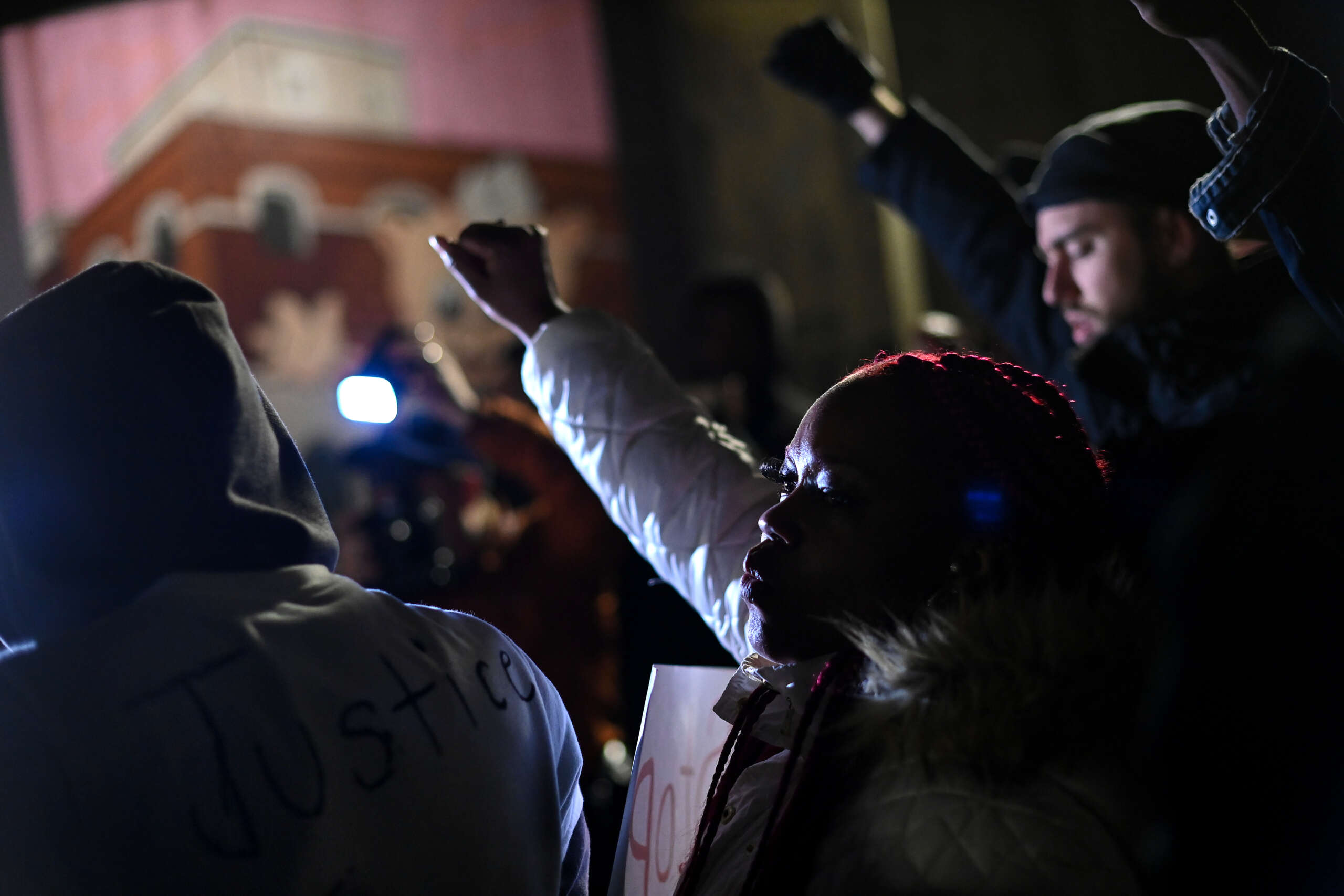
Every year on Martin Luther King Jr. Day, elected officials quote King while standing safely at a distance from the risks he embraced. His name is invoked, his image sanitized, and his politics stripped of urgency. The U.S. celebrates a softened King who spoke about love but not power, unity but not confrontation, peace but not disruption. What we rarely confront is this truth: Martin Luther King Jr. was not merely misunderstood in his time. He was actively surveilled, criminalized, and treated as a threat to the hegemonic order in the U.S.
That history is not behind us. It is unfolding again.
In recent weeks, shootings involving federal agents connected to immigration enforcement and homeland security operations in Minneapolis and Portland have raised urgent questions about the expanding reach of federal policing, the militarization of law enforcement, and the dangers of unchecked surveillance powers. These incidents are not isolated. They exist within a long arc of state authority asserting itself most aggressively where dissent, migration, and racialized resistance converge.
To understand this moment, we must tell the truth about King’s.
Under the direction of J. Edgar Hoover, the FBI conducted an extensive campaign of surveillance against Martin Luther King Jr.: King’s phones were tapped. His movements were tracked. His private life was scrutinized and weaponized. Hoover famously described King as “the most dangerous Negro in America,” not because King was violent, but because he was effective. Hoover feared what he called the rise of a “Black Messiah” — a leader capable of unifying Black people across class lines and mobilizing moral resistance to state violence, economic exploitation, and militarism.
King was not targeted because he preached hate. He was targeted because he preached liberation.
This repression intensified as King moved beyond civil rights rhetoric into structural critique. When he opposed the Vietnam War, organized the Poor People’s Campaign, and challenged economic inequality, King crossed an invisible line. He became not just a moral voice, but a political threat. Surveillance was the state’s response.
That logic did not end with Hoover. It evolved.
I know this not as distant history, but as lived reality. In Memphis, beginning around 2016 and intensifying through 2017 and 2018, people organizing for racial justice found ourselves under police surveillance because of our participation in collective efforts demanding accountability, transparency, and criminal justice reform. Faith leaders, grassroots organizers, and activists connected to the Movement for Black Lives-aligned efforts were engaged in lawful, nonviolent organizing when the Memphis Police Department tracked protests, monitored social media pages, and documented organizing strategies. What should have been protected civic engagement was treated as a threat.
The lesson was unmistakable: surveillance is not abstract. It is personal, local, and routinely deployed to suppress Black political dissent rather than protect public safety.
Today, we witness new forms of state surveillance justified under the language of “public safety,” “border security,” and “anti-terrorism.” Federal agencies like Immigration and Customs Enforcement operate with extraordinary discretion, often in communities already intensely policed and under-protected. When federal agents are deployed to cities without transparency or accountability, and when violence follows, the public is told to trust the process rather than interrogate the power.
State sponsored terrorism led by an authoritarian in the name of public safety can put on a different mask over time but it’s the same old shit whether it’s Robespierre’s, Hoover’s, or Trump’s reign of terror.
Dress it up in whatever justification you like, when a government is this terrified of civilian free speech you’re not some protective misunderstood warrior, you’re just another terrified tyrant desperately clinging to a facade of power that hasn’t crumbled yet.
From TIME’s Archives: The Truth About J. Edgar Hoover (1975)
He was a petty man of towering personal hates. There was more than a tinge of racism in his vicious vendetta against Martin Luther King Jr. He had to be pushed into hiring black agents for the bureau.
The fact that such a man could acquire and keep that kind of power raises disturbing questions not merely about the role of a national police in a democracy, but also about the political system that tolerated him for so long. The revelations show too that those political dissidents in years past who complained they were being harassed and spied upon were not so paranoid after all.
Mainly by infiltrating the Ku Klux Klan, the FBI was able to act swiftly in the early 1960s to solve several murders of civil rights workers in the South. But, as King charged, the bureau did little about enforcing civil rights laws that did not involve such sensational crimes. One reason: the FBI was concentrating on catching auto thieves and fugitives so as to keep its Southern bureaus’ arrest and recovery statistics on Hoover’s mandated upward curves.
It was King’s criticism that led Hoover to call him “the most notorious liar in the U.S.” and to launch an ugly vendetta against him. Hoover ordered one tape from a bugged Miami hotel room where King had been staying sent anonymously to King’s wife. The FBI sent word of King’s reported sexual activities to the Pope, trying to convince the Pontiff not to receive him.
I keep imagining the pope’s reaction to this shit. Like what the actual fuck is wrong with this man? Imagine Kash Patel or Trump contacting the Pope with some creepy voyeuristic bullshit, like “we just wanted to give you a heads up that we’ve been spying on a private citizen who has been committing dangerous thought crimes and here are the details of his sex life. We just thought it would be appropriate to make sure you know about it, since you are the pope… We’re not weird and perverted creeps, he is!”
Imagine living under the tyranny of such a pathetic and small little man like Hoover, followed by the collective sigh of relief when he was finally gone in 1975. An entire nation so afraid to speak out against such an obvious hypocrite who held so much power and authority to wield all of federal law enforcement however he saw fit.
A man with such a fragile little ego, so threatened by the voice of a single American pointing out that the tyrant cared more about headlines and meeting politicized quotas, than actually protecting America, that he responded by devoting an obscene amount of man power and tax dollars to harassing a patriot who refused to be intimidated into silence, and attempting to destroy his reputation.
Imagine it’s 1975 and journalists and even federal law enforcement agents are brushing themselves off with a chuckle and asking “wow, how and why did we ever put up with it? Why was America’s tyrannical abusive father figure ever allowed to get away with it for so long?”
Thank God we started holding law enforcement and government officials accountable for their unconstitutional abuse of authority, and not just white washing or excusing tyrannical behavior as something that had to be done for the safety of our nation, right?
It’s not like we’ve repeatedly excused the abuse of tyrants with claims that even if we can’t always understand it, we just have to trust that our leader/police/military/father always knows what’s best for us. Whatever you did to earn his wrath, was probably, mostly, your own fault, and he only did what had to be done. For the common good of the nation.
Thank God we have definitely acknowledged and continue to acknowledge the hard truths and uncomfortable lessons we’ve all learned from history instead of just repeating the same mistakes for over 50 years. Otherwise, what a fucking nightmare we’d be living in currently.