This has a certain gadgetbahn-smell over it and I remain skeptical.
Ditching catenaries for batteries make the vehicles heavier, requires them to be out of service for a part of the day to recharge and increases capex per vehicle instead of taking the capex on catenaries.
The claims of autonomous driving seem dubious - this usually warrants a level of separation that’s rarely afforded to trams. It’s possible, but it for sure requires not cheaping out on the infrastructure.
Ditching timetables in favour of some kind of demand-driven dispatch reduces the predictability of the network, and also seems unnecessary if the claims of autonomous driving are actually true. Maybe they have to cheap out on the amount of vehicles when making each vehicle more expensive with the batteries.
Who knows, maybe the numbers work out better than what we can see here, but until then, I remain skeptical. I hope to be proven wrong.
At the very best there are design choices here that are limiting its overall performance in order to make it cheaper and less invasive to install. Similar to a BRT.
It is possible that there is a use case for lower density areas where the lower costs could help make or break a business case.
To my mind though a city or large town is not the use case we know the answer for that and its regular light rail done consistently and coherently across the country to achieve economies of scale (as they have done in France). Sadly, the UK can’t get past its ideology that money spent on public transport infrastructure is a waste whereas it is an investment in functioning economies.


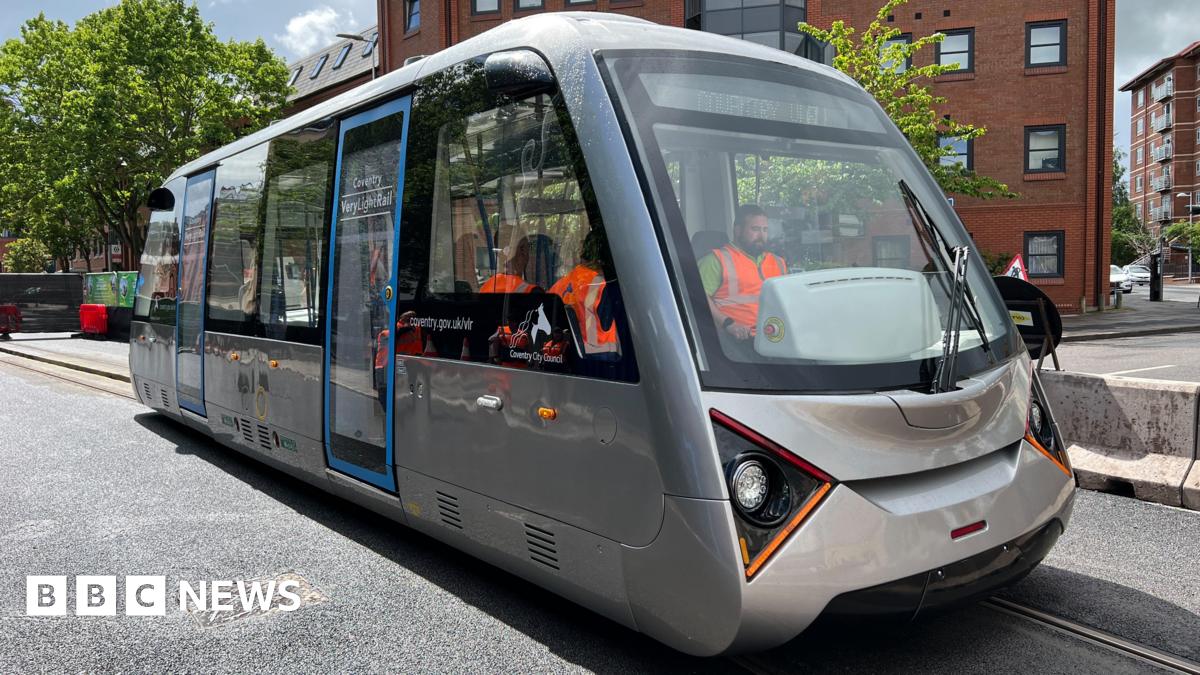
https://en.wikipedia.org/wiki/Coventry_Very_Light_Rail
This has a certain gadgetbahn-smell over it and I remain skeptical.
Ditching catenaries for batteries make the vehicles heavier, requires them to be out of service for a part of the day to recharge and increases capex per vehicle instead of taking the capex on catenaries.
The claims of autonomous driving seem dubious - this usually warrants a level of separation that’s rarely afforded to trams. It’s possible, but it for sure requires not cheaping out on the infrastructure.
Ditching timetables in favour of some kind of demand-driven dispatch reduces the predictability of the network, and also seems unnecessary if the claims of autonomous driving are actually true. Maybe they have to cheap out on the amount of vehicles when making each vehicle more expensive with the batteries.
Who knows, maybe the numbers work out better than what we can see here, but until then, I remain skeptical. I hope to be proven wrong.
At the very best there are design choices here that are limiting its overall performance in order to make it cheaper and less invasive to install. Similar to a BRT.
It is possible that there is a use case for lower density areas where the lower costs could help make or break a business case.
To my mind though a city or large town is not the use case we know the answer for that and its regular light rail done consistently and coherently across the country to achieve economies of scale (as they have done in France). Sadly, the UK can’t get past its ideology that money spent on public transport infrastructure is a waste whereas it is an investment in functioning economies.