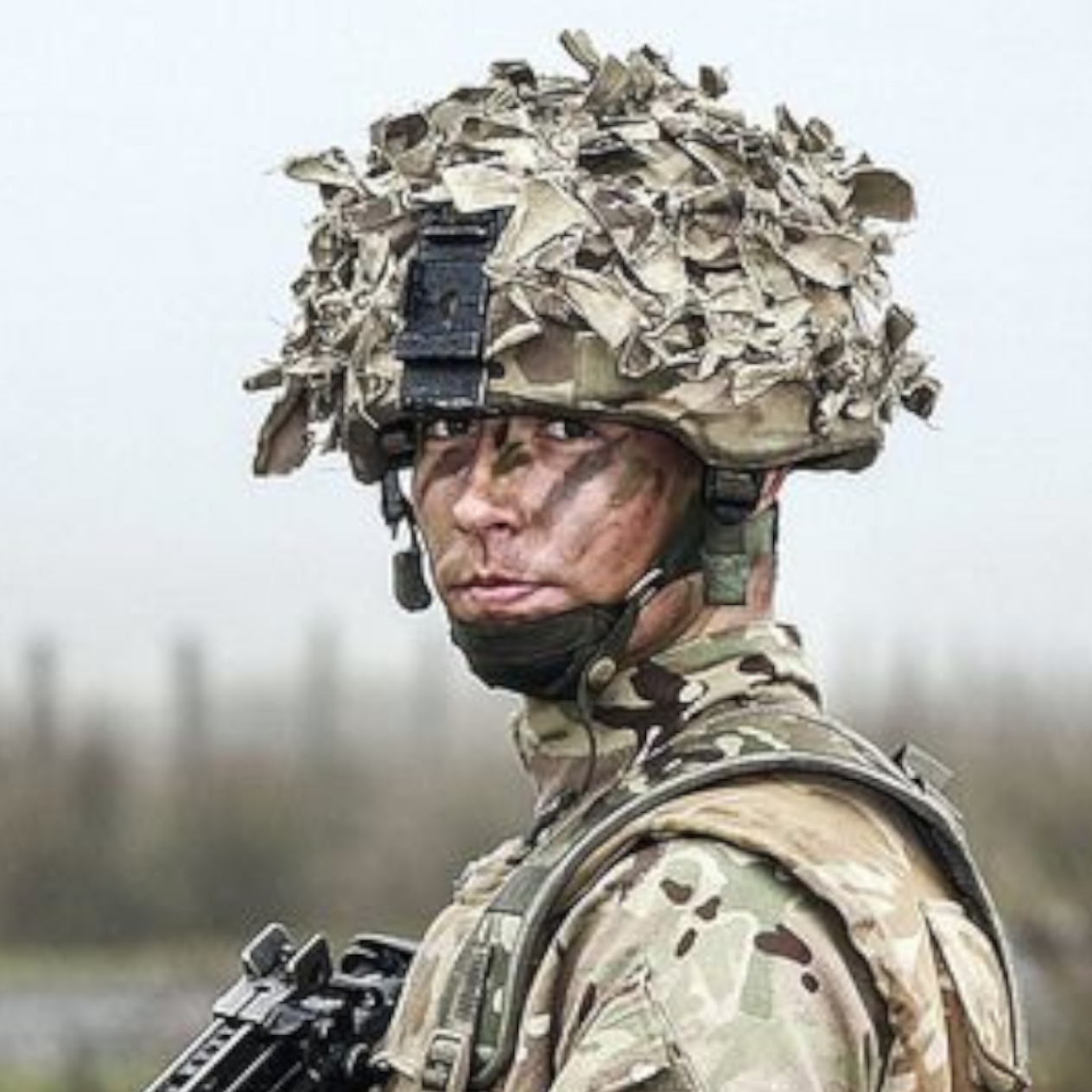
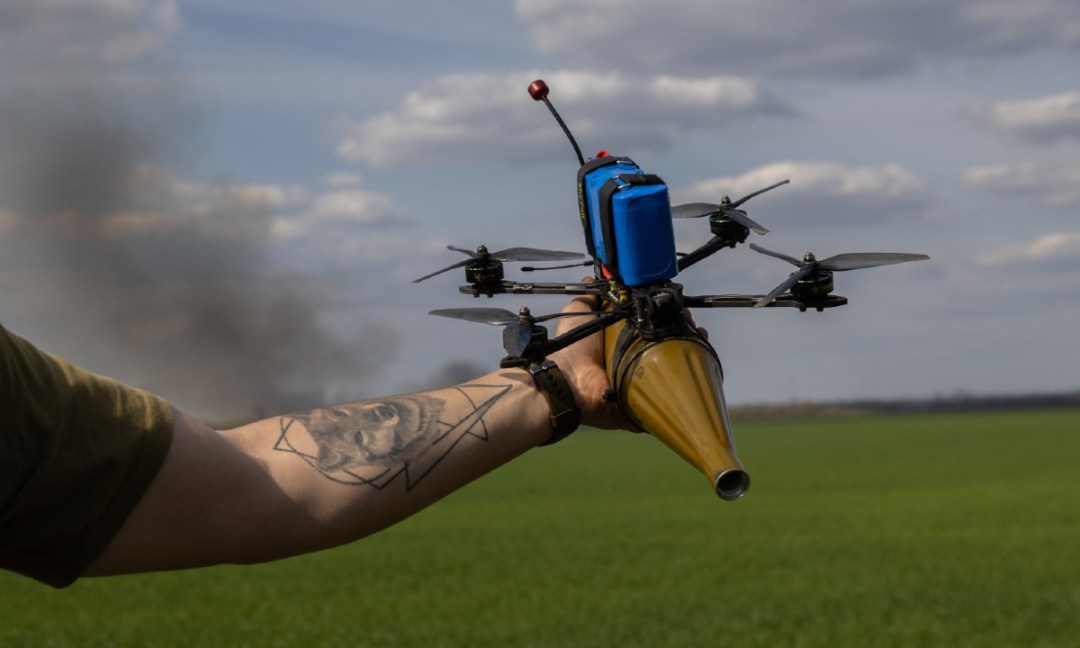
This last point is key, because the lesson from this exercise is that the Ukrainian participants employed tactics adapted for the modern, drone-saturated battlefield, while NATO forces have not been forced by the realities of war to do the same.
These reported results have been widely cited as evidence that drones now dominate the modern battlespace. A short internet search quickly turns up comments where analysts frequently claim that drones account for a majority of casualties in the Ukraine war, and recent British defense reviews have described drones as an essential component of land warfare. Ukrainian officials have echoed this assessment, emphasizing the transformative impact of battlefield technologies, and have expressed a willingness to share their experience with NATO partners.
However, these conclusions, although valid, warrant caution. Drones generate significant tactical effects, but tactical success must be considered as part of the tactics/operations/strategy hierarchy. Recall that tactical success does not equate to strategic transformation. To borrow William Shakespeare’s phrase, it might be fair to say that drones offer “more light than heat.”
Their main achievement on the battlefield has been to greatly restrict the mobility of both sides. In this respect, drones resemble submarines or antitank weapons: They may be effective at denying portions of the battlespace, but are incapable of controlling it. And like submarines and antitank weapons, drones operate within established military theory. They operate within existing paradigms rather than breaking them. Therefore, as argued in our book Not Dead: A Case for Tanks in the Modern Battlespace, they should be understood as an evolutionary, not revolutionary, development and their employment considered within the broader context of combined arms theory and practice.
I think the West Point experts are misunderstanding something fundamental about drones:
Aircraft don’t generally fear projectiles, because of “big sky: little bullets”.
But drones flip that, completely, because they’re ACTIVE in aiming.
That-is, how do you defend against cubic-km of airspace above+near you, when a drone in ANY of it can precisely kill you.
The battlefield-immobilization that drone-warfare produces, can only be undone when that HUGE volume of precision-threat is mitigated.
It isn’t anything like “big sky, little bullets”, instead its more like “everywhere we go, OUR sky is a haystack, & there’s likely a DEADLY needle in it, that we have to mitigate successfully, XOR we’re dead”.
Totally different equation, favoring the drones.
“big sky: little bullets” favors the aircraft, not the non-aiming bullets.
The amount of interceptor you need to be able to throw at incoming-drones & incoming-missiles, is significant.
Regaining mobility’s going to be FAR more expensive than it had been in the previous evolutions/revolutions.
_ /\ _
Russia utterly failed to evolve their rotary wing doctrine to keep up with technology even before drone use exploded, the same can not be said for the rest of the world, especially the US.
https://en.wikipedia.org/wiki/Advanced_Precision_Kill_Weapon_System
https://www.army.mil/article/290943/apex_round_for_apache_tested_at_u_s_army_yuma_proving_ground
https://www.army.mil/article/76054/aviation_electronic_warfare