
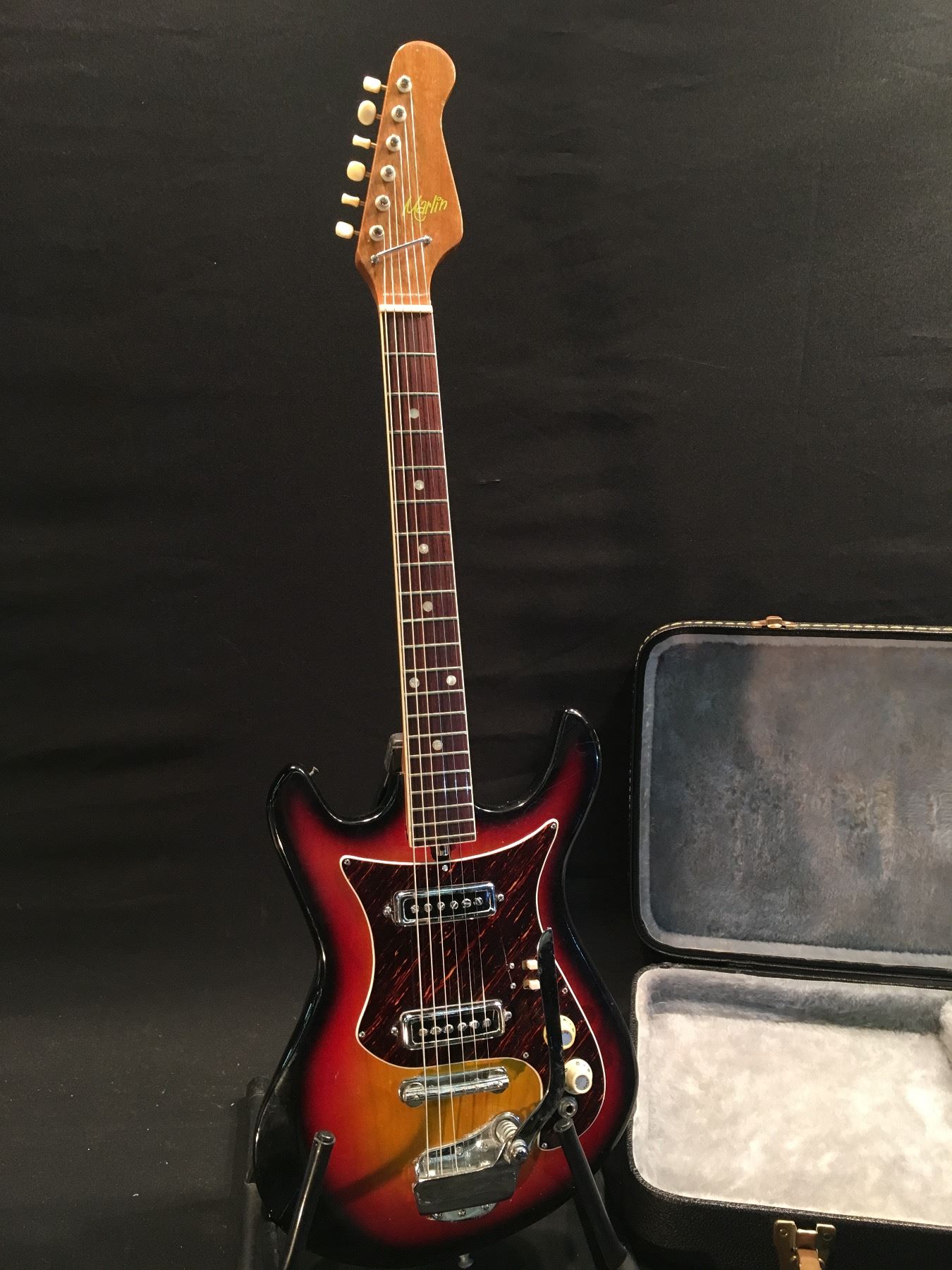
I have had a 1960-era Marlin (not Martin!) guitar since I was a teen in the '80s. I abused it, trashed the finish, changed the electronics, and then took it apart for a project that never happened.
I’d like to restore it roughly to its original state. Right now, it’s all about the electronics.
First off, is there any advantage to lining the body (pickup) cavity with copper foil? Will it reduce the noise and hum?
Secondly, since I have to desolder the switches, will twisting the pickup leads help?
Thirdly, does anyone have a wiring diagram for this thing? Two single coil pickups each run to an on/off toggle, but then I’ve got a handful of broken and loose parts.
The URL is for an auction of a guitar (almost) identical to mine, just to trigger anyone’s memories.
Thanks all!
You must log in or # to comment.
- Shielding is a simple but effective upgrade, expecially when the guitar has single coils in it. Just remember to connect the circuit ground to the shielding with a screw or something otherwise it’s going to be useless
- Twisting leads is another thing that helps keeping your signal clean of interferences. Some say it heightens resistance values in the circuit but in my experience I never heard anything noticeable
- For the schematics I would look at stock Fender Mustang wiring. It has two on-off-on switches instead of just on-off but you can see if you can fit the o-o-o on yours and have the phase switching circuit. Alternatively you can rework the circuit for o-o witches (should be easy, if you need help ask).

Copper foil isolates the pickups from outside radio signals
About the second question – help with what?
Not sure about the diagram, is there a single volume and a single tone knob or two volume knobs?
edit: nevermind, it says it’s a single volume and single tone configuration in the description. I’d say it’s not that difficult to work out what goes where based on a different guitar’s diagram, but I’d have to catch up on the correct polarities and serial or parallel connections, stuff like that