

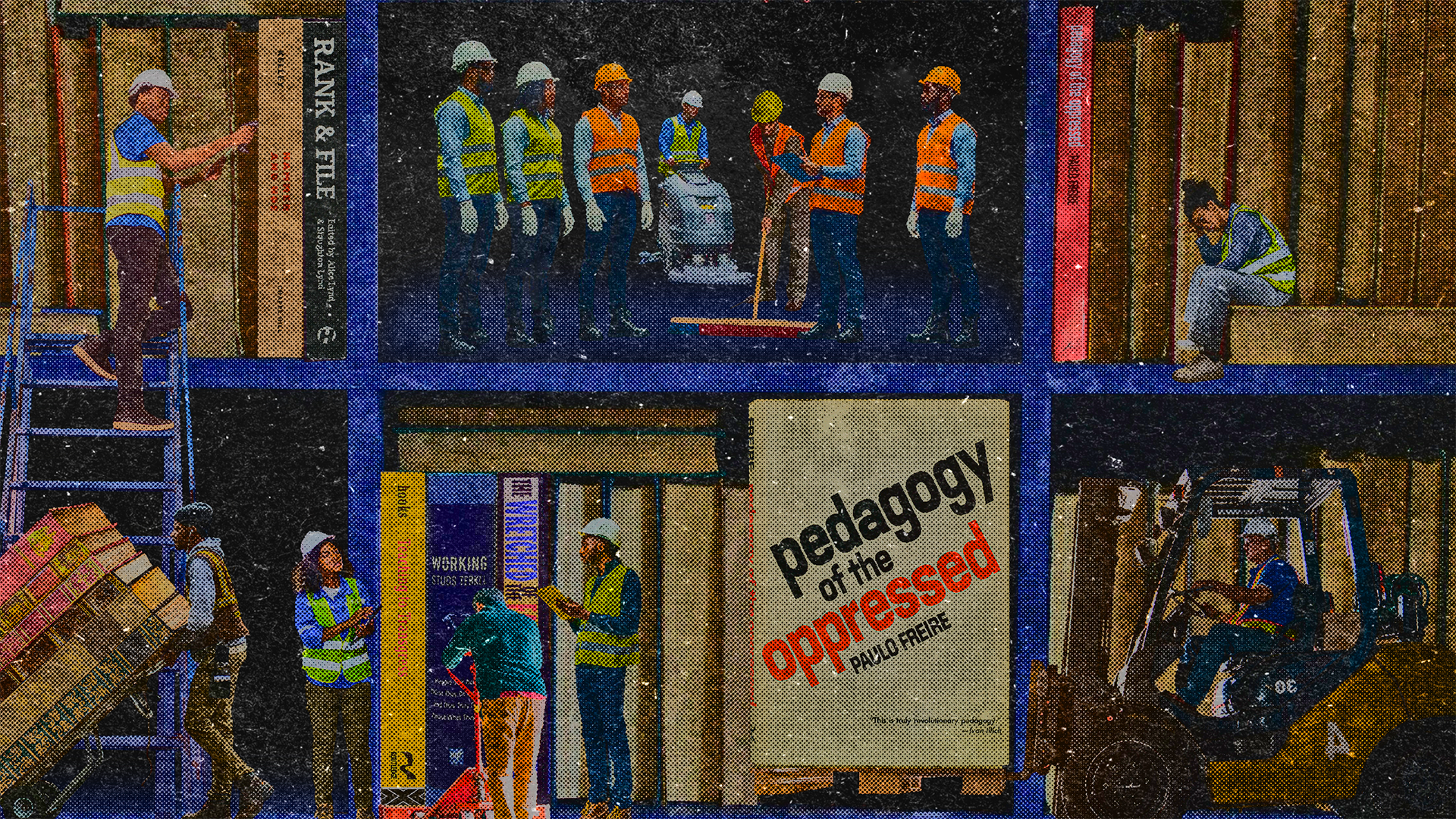
The Union of Southern Service Workers (USSW) is an organization of workers in the low-wage, high-turnover service industry of the U.S. South, with members in North Carolina, South Carolina, Alabama, and Georgia. From the beginning, the union has placed political education at the center of its strategic vision. USSW understands that to transform workplaces and communities, workers must understand the roots of the system that exploits them and develop the skills necessary to fight back. As with any union or community organization, USSW runs campaigns to win concrete, material victories. But the real fruit of the union’s organizing work lies in the constant political formation within an expanding base of dedicated worker militants. Unlike the traditional union model, USSW treats political education not as ancillary training, but as a core component of its method; it is a dimension of the union’s approach that makes victories durable and transforms workers into long-term leaders.
Having grown up in New York, Tahtebah “Tee” Gonzalez immediately felt the culture shock of working in the U.S. South. At Dunkin’, his pay was just $9 an hour, just barely above minimum wage and a third of Fulton County’s living wage. The conditions of low pay, overwork, and understaffing boiled over when Tee and his coworkers discovered that other workers in the same shopping center would be paid extra to work a busy weekend in downtown Atlanta during the Dragon-Con convention.
When a USSW organizer visited his store days later, Tee and his coworkers were already agitated and ready to act. Within a week, they had organized a weekend-long strike. The action won them a raise they had once considered impossible. More importantly, it proved to Tee that workers held real power: When they fight together, they can win.
That breakthrough—shifting from isolated frustration to collective action—was the spark of political consciousness. But in the USSW, the spark does not fade. Tee’s first strike was only the beginning of a longer process of formation, sustained by the union’s model of political education and leadership development. Through Worker Power Schools, collective study, and the discipline of organizing, Tee deepened his understanding of the system that exploits workers and gained the skills to lead others. What began as a fight over wages became a journey of transformation: from an exhausted service worker into a committed leader of a broader struggle for dignity and justice in the South.