Cowbee [he/they]
Actually, this town has more than enough room for the two of us
He/him or they/them, doesn’t matter too much
Marxist-Leninist ☭
Interested in Marxism-Leninism? Check out my “Read Theory, Darn it!” introductory reading list!
- 27 Posts
- 10.5K Comments
Thank you so much for your input regarding Norway specifically! I’m in the US, so it’s super helpful to have someone that is more intimately familiar with Norway’s particular struggles in Capitalism weigh in. Great job!
Neither Cuba, or the DPRK. Instead, heavy sanctions are already in place.
Kinda silly to be using the Western state funded media BBC, a glorified propaganda outlet, as a genuine source on China (they have been known to tell literal lies and forge information about China).
Either way, you’re correct, it isn’t charity, countries don’t work that way. It isn’t a debt trap either though, the loans don’t come with the excessive interest rates Western Loans do, and don’t come with requirements to privatize nationalized resources like Oil for foregin plundering like Western Loans do. On top of this, Chinese loans are frequently forgiven.
Why are they doing it? To build up customers as an alternative to US consumers. They want allies and people who will buy their stuff that aren’t constantly threatening war.
Waiting for international cooperation to soley benefit the party recieving it, ie charity, as the only legitimate form of cooperation and all else exploitation is hopelessly naive.
The purpose of BRI is to industrialize countries and build up new customers for the products China makes. They are doing it for their own benefit, sure, but it isn’t done in a manner that’s exploitative. Compare that to Western Countries, where brutal IMF loans come with requirements to sell off and privatize nationalized industries and resources (commonly oil or rare Earth), and claims of exploitation from China are merely there to protect the validity of the Western IMF loans. After all, why would anyone take a Western loan if the Chinese loans and programs are usually on much better terms? You’ll find that the Global South is quite aware of this and is thus turning from the West and towards China.
Yep! It’s not a specifically US Strategy to try to millitarize footholds on the borders of countries it is hostile to in order to pressure and threaten them, other countries have done the same throughout history, but the US is by far the country doing it the most in modern times and it isn’t close.

The “neither Washington nor Beijing” folk always try to draw equivalences even when Trump is tanking the world economy and China is the only one with the means and reason to take a stand. The truth is, China isn’t a bully, while the US absolutely is. It isn’t China with the hundreds of millitary bases worldwide, it is always China pushing for multilateralism.
Is China perfect? Nope. Is it getting steadily better as the US is steadily getting worse? Undoubtedly. The fact is, Socialism works, and the genocidal settler-colony of the US Empire does everything it can to make people see the PRC as equal to its evil even with the most sophisticated propaganda networks on Earth.
Meant that to say Taiwan, which is what the source reflects. And yes, I’m familiar, it’s a complicated issue juggling US investment and millitarization, and economic ties with the PRC. Presumably de-escalation and normalization would be most popular if the US would agree to that.
I touched on it here:
Whether intentionally or not, this idea that China can’t be better than the US is rooted in eurocentric chauvanism that tries to desparately cling to the idea that Western countries cannot be surpassed morally and materially. There can only be morally good countries or materially prosperous countries, because the US is morally bankrupt but materially wealthy. China shatters the idea that these sins are necessary to preserve this wealth, which sends the “neither Washington nor Beijing” folk into logical pretzels and existential crises.
“I promise I won’t get political”
me, one drink later
We may live in a different universe after all, you may live in the land of fiction and that may explain your reasoning.
The ROC’s government was taken over by the nationalist Kuomintang when they lost the Chinese Civil War against the Communists, then the US and UK propped them up to maintain a millitary foothold in the region against the rising Communist-bloc nation. The KMT massacred many who opposed them in what is known as the “White Terror.” Today, polling with Taiwan indicates precisely what I said, independence and integration are minority opinions. Meanwhile, the US constantly runs millitary simulations near the coast of the mainland between them in an effort to terrorize and provoke the PRC into taking the first move.
For Hong Kong, you’re batting for British dictatorial colonialism and against what the majority of people wanted, despite “One Country, Two Systems” being established all the way back in 1997. They have already been integrated with China, the protests were largely sparked by controversies over extradition laws (and the protests are nowhere to be seen, anymore).
Attributing famine in a developing agrarian country entirely to Mao and washing aside the intentional genocidal Imperialism the US has performed in order to pursue profits is nonsense. You’re comparing a mass murderer for profit to a country that went through massive economic hardship in pulling itself out of a century of US and UK colonialism, along with Japanese colonialism. And guess what? The US committed genocide on the Indigenous Americans for their land, and used slave labor to develop, and to this day is massacring innocents right this second in places like Yemen.
Moreover, China has countless allies. The US millitary occupations in Taiwan, South Korea, and Japan don’t alone mean that China is always seen as a “bully.” Plenty of its neighbors see it as friends, and year after year more people sign up for BRI and BRICS. More and more nations turn away from US loans that come with clauses requiring privatization of state industry for Chinese loans that don’t come with such stipulations, and now even the EU is turning away from the US and towards the PRC.
You have nothing, you wash the intentional and deliberate murder of millions for the profits of a handful of US elites under the rug in a desparate attempt to draw equivalence between the world’s largest and bloodiest Empire and a country that hasn’t been at war in many decades.
Do some introspection, this is utterly nonsense.
Lmao, absolutely obliterated them with their own tools
Genuinely baffled and horrified that there are more than 2 people that believe this shit
Taiwanese citizens want the status quo, not independence nor reconcilliation. Framing that as the PRC “bullying them” when the US regularly tries to provoke the PRC into invading is silly. Hong Kongers were liberated from British Colonialism and the majority are happy to be folded into the PRC. Tibet is an autonomous zone currently, the Dalai Lama worked with the CIA and when the PLA liberated Tibet they freed the vast majority of people from the slave-based economy where the ruling class would relentlessly torture them. Xinjiang is also constantly misrepresented and distorted purely to discredit the PRC as an alternative to the US Empire’s constant genocidal invasions.
It isn’t just a “lesser evil,” it’s the only realistic option that can be considered good. The US murdered 1 million Iraqis, hundreds of thousands to millions of Koreans, Cambodians, Vietnamese, Nicaraguans, Palestinians, and many, many more, just to keep feeding the Empire. There is no comparison, the US is unfathomably evil and the fence-sitters that try to paint China as somehow being equivalent are entirely wrong.
Whether intentionally or not, this idea that China can’t be better than the US is rooted in eurocentric chauvanism that tries to desparately cling to the idea that Western countries cannot be surpassed morally and materially. There can only be morally good countries or materially prosperous countries, because the US is morally bankrupt but materially wealthy. China shatters the idea that these sins are necessary to preserve this wealth, which sends the “neither Washington nor Beijing” folk into logical pretzels and existential crises.
The “neither Washington nor Beijing” folk always try to draw equivalences even when Trump is tanking the world economy and China is the only one with the means and reason to take a stand. The truth is, China isn’t a bully, while the US absolutely is. It isn’t China with the hundreds of millitary bases worldwide, it is always China pushing for multilateralism.
Is China perfect? Nope. Is it getting steadily better as the US is steadily getting worse? Undoubtedly. The fact is, Socialism works, and the genocidal settler-colony of the US Empire does everything it can to make people see the PRC as equal to its evil even with the most sophisticated propaganda networks on Earth.
Yep, almost poetic seeing the Empire churn out the next line of caretakers that actually believe the lies the last ones told
No problem! And for what it’s worth, Marxism is demonized everywhere outside of AES countries, like Cuba and the PRC. We can’t really vote Marxism in in the US, either, even without the 2 party system. Marxists have spend centuries testing what works and what doesn’t, and ultimately revolution has proven to be the most proven method. More on that in the reading list!





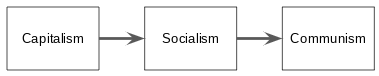

In that case, I don’t really think we disagree. Many Socialist states have smaller cells for decision-making that doesn’t necessarily benefit from having more information or cooperation between cells. The Soviet model functioned much in the same way, though it had its own share of issues such as planning by hand, rather than computer, and trying to abolish market forces before they outlived their usefulness.
China presently does a good job juggling all of these complicated nuances, and their party structure plays a large part in that. Central planning works best in highly developed firms, and markets do a good job of reaching those levels of development.