

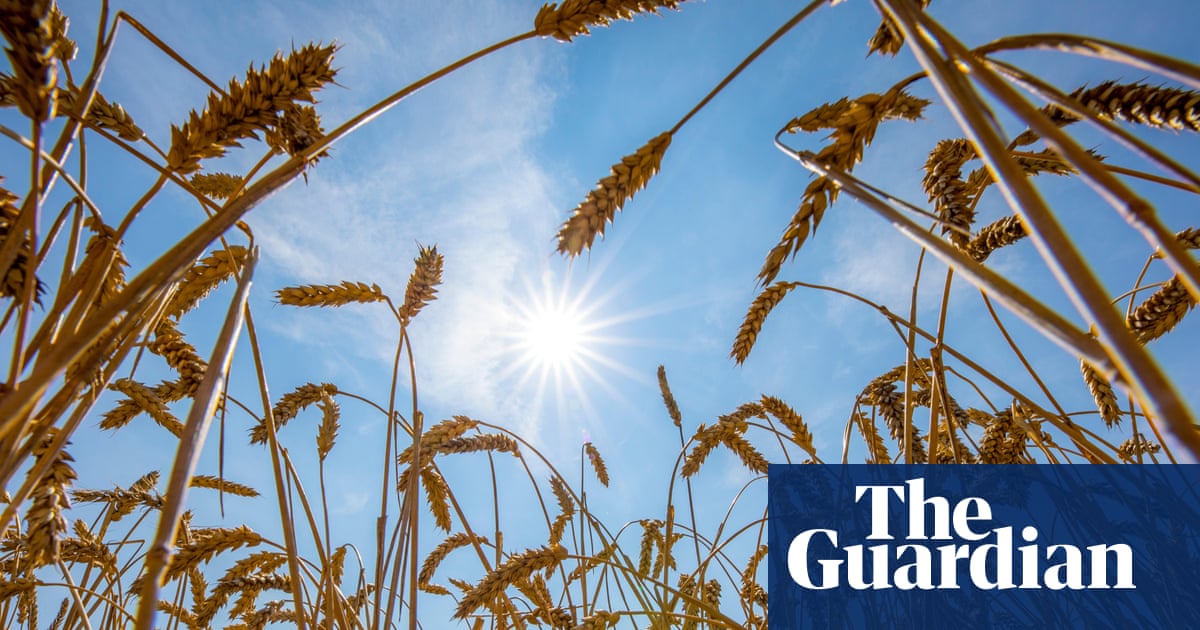
Extreme heat is threatening the world’s food systems, with farmers unable to work outside, livestock experiencing stress and crop yields falling, putting the livelihoods of more than a billion people in peril, the UN has warned.
Experts said food supply in some areas was being “pushed to the brink” by increasingly common and severe heatwaves, on land and at sea, in a major report written jointly by the Food and Agriculture Organization (FAO) and the World Meteorological Organization (WMO).
Yields begin to decline at temperatures above 30C for most agricultural crops, with damage including weakened cell walls and the production of toxins. The yields of maize in some areas have declined by about 10%. Wheat has fallen by nearly as much, and is projected to decline further as temperatures rise to more than 1.5C above preindustrial levels.
development of a more diverse food system, better equipped to withstand shocks, and a reversal of trends in intensive agriculture that have robbed farms of trees, shade and mixtures of crops
With each new article like this that gets published, it’s ever more obvious that biodiverse food forests are the solution.
Agreed. Perhaps not the only solution but certainly an important one. Along with food forests is having them and smaller scale food growing initiatives closer to populations and having those populations involved. How to get industrial agriculture to change their poisonous, profit-driven model?
How to get industrial agriculture to change their poisonous, profit-driven model?
We cannot change the system; we must operate outside of the system as much as possible and make it obsolete.