

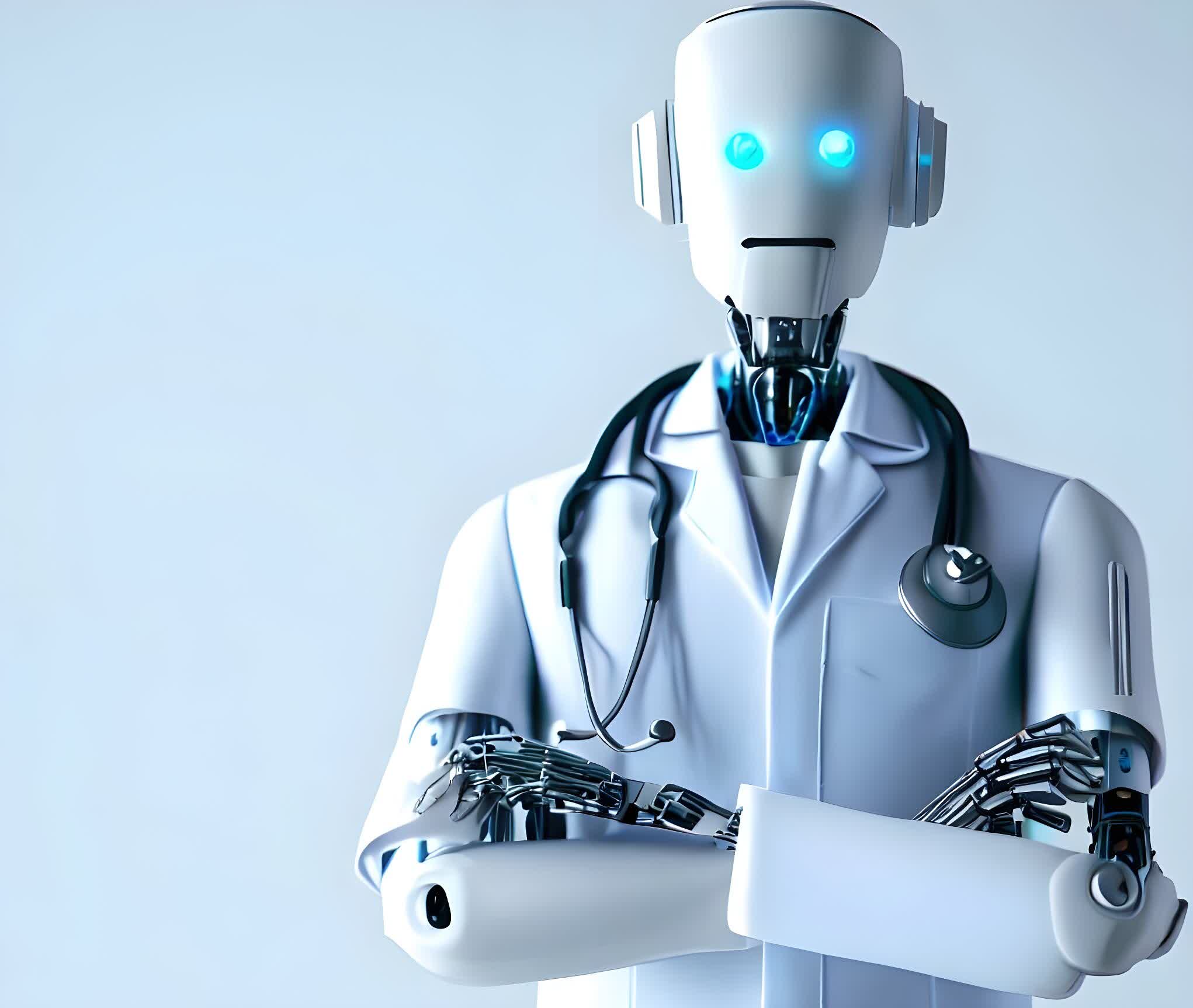
Being a doctor is one of the jobs expected to be least at risk from AI replacement. But a new program launched in Utah is raising questions over that assumption. A healthcare startup will begin offering AI examinations and prescriptions to patients without direct human oversight, making Utah the first state to replace a doctor with an AI.
The good news is that the program is currently very limited in its scope. It’s just one year long and only for patients with mild-to-moderate acne.
The process works when a person signs up for Nolla Health’s $4.99-per-month app and uses it to scan their face. After completing a medical history and personal information form, the AI analyzes their skin, identifies the acne problem, rates the skin’s oiliness, and then generates a numerical acne severity score that ranges between clear skin and severe acne, reports Bloomberg.
This is a very limited-in-scope use that may be a good scenario for AI to be used on. AI has been incredible at identifying things on X-rays and other scans, so it’ll be relatively simple to diagnose someone with mild-to severe acne and prescribe a set number of medications based on that diagnosis. Couple of medications, and couple of diagnosis, and anything that isn’t immediately identifiable, it sends a request to an actual doc to check it out. There aren’t a ton of different things that humans get that manifest as acne, so yeah, great use-case scenario.
I mean, we’ve all seen star-trek, we all got used to the idea of a hologram doctor, or an on-board ships computer handling routine medical situations. This is how we get there!
I saw a study once that said that during an initial work-up, when a nurse was taking a patients history and complaint, if the nurses followed a relatively simple step-by-step guide that asked questions and worked it’s way through all our systems, that the history was more complete, diagnosis was simpler, and things were less often missed, when compared to a nurse not following the handy guide. Simply put, that’s how a computer model would work. It’d have a routine to go through, it wouldn’t skip any steps, and through a lot of yes-and-no questions, a lot of “check this- if not that, then check this” style sub-routines, you could diagnose a LOT of maladies extremely efficiently. And with none of the bias that comes from a human doc.
Another plus, the medical robot would take women’s pain more seriously than your average doctor.
Your framing assumes some kind of science fiction AI that’s like Data from STtNG. It’s not. AI is as biased as humans are as a result of its training data. We have a WEALTH of data on this fact and you assuming that the bot will be more objective tells me you don’t know much about this subject.
Furthermore, in Star Trek, the ship’s doctor is an actual human; not a hologram. I’m really not sure if you’re familiar with the material you’re referencing.
This is how it begins, it will start off with some early trials and before you know it most work will be Claude in this field.
What a wonderful future to look forward to! No human will ever have to aspire to anything but a glassy eyed, brain-dead, media-iliterate consumer!
Is Robert Picardo a joke to you? You’re not familiar with Voyager? Sounds like you’re a pompous ass talking out of it.
Training data in this case would be a series of scans of people faces with mild to severe acne. Hard to have a bias in such a limited capacity.
“Hard to have bias in such limited capacity.”
My god you have no idea what overfitting is. Here let me help you.
https://fas.org/publication/face-recognition-bias/
https://mitsloan.mit.edu/ideas-made-to-matter/unmasking-bias-facial-recognition-algorithms
https://www.turing.ac.uk/sites/default/files/2020-10/understanding_bias_in_facial_recognition_technology.pdf
Those are all about facial recognition, identifying individuals. This is more acne recognition, no? What bias can there be when identifying open sores and presence of oil?
OK, it is clear you have not built one of these and that’s OK.
The AI doesn’t “know” what acne is, it doesn’t “know” things like you and I do. It can theoretically identify it uniformly if it’s training data is uniform but, overwhelmingly, that is not the case.
Case in point. Acne on dark skin looks different from acne on light skin. If the model is trained like facial recognition software (which it certainly will be) then it will perform comparably. That is, it will consistently misdiagnose for people of color the same way facial recognition flags people of color incorrectly.
AI is, honestly, more biased than humans are as we can self identify our own bias which has shown to largely eliminate it. AI is not self-aware, it can’t self correct like we can.
EDIT: This also doesn’t address my core point that we should not want to offload cognitive work, we should seek to train our knowledge workers better so they can produce better outcomes.
That’s an assumption. It’s also an assumption that the model would misdiagnose open sores and lesions on one type of skin vs another. Facial recognition software, the ability of the model to tell different people apart, is a hell of a lot different than identifying the mere presence of open sores and oil.
Did you even read the article?
Again I say, this is a limited use-case, in which a very easy diagnosis can be attained through imaging equipment. We have a limited number of doctors, they can be utilized more effectively instead of dealing with a bunch of pimple-faced teens.